




What is an MSWiA promise of a permit?
Under the Act on the Acquisition of Real Estate by Foreigners, a foreign national or entity intending to acquire property may apply for a promise that a permit will be issued. A promise is therefore a commitment by the authority to issue a permit, although it is not an unconditional guarantee. Its key legal effect is that, while the promise remains valid, MSWiA cannot refuse to issue the permit unless facts material to the decision have changed.
A promise is not a general authorisation allowing a foreign buyer to purchase any property in Poland. Like an application for a property acquisition permit, an application for a promise should concern a specific, adequately described proposed investment. The procedure is neither simplified nor expedited. To acquire the property, the beneficiary of the promise must subsequently obtain the permit itself.
Nor is a promise a mandatory preliminary stage in obtaining a permit. Where the property, the parties and the transaction terms are sufficiently defined, the buyer should consider applying directly for a property acquisition permit.
Is a property acquisition permit actually required?
Before applying to MSWiA for a promise, the first step is to establish whether the purchase requires a permit at all. Holding citizenship other than Polish citizenship does not automatically mean that an MSWiA permit is necessary. The Act on the Acquisition of Real Estate by Foreigners provides exemptions, including for citizens of European Economic Area countries and Switzerland and, as a general rule, for the acquisition of a self-contained residential unit. The full circumstances of the proposed purchase should therefore be assessed first.
We explain this in more detail in our article on when an MSWiA permit for purchase of real property is required.
When should you apply for a promise? Practical examples
Buying from a developer before the final property details are established
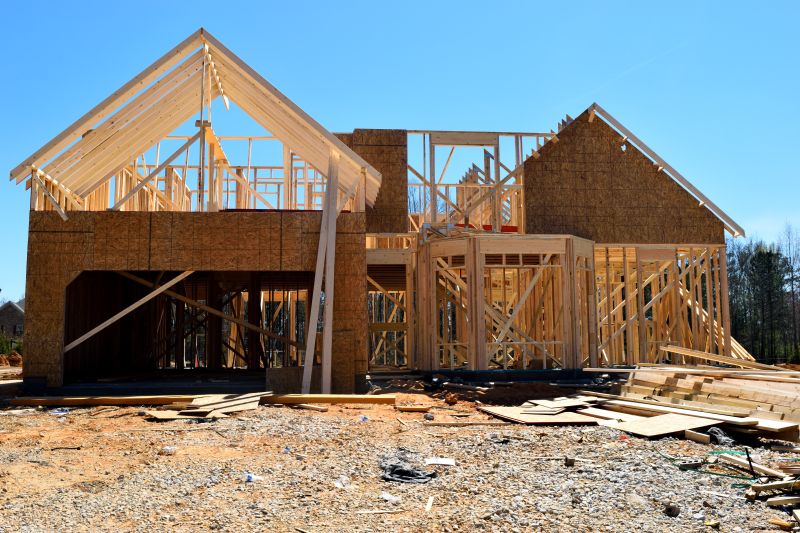
A promise may be useful where the final details of the property, such as the floor area of the apartment or the share in the common property, are not yet known. At this stage, the apartment may already be identified in the development documentation, even though its final floor area or the size of the associated share in the common property has not been established. In these circumstances, applying for a promise may be worth considering.
However, a promise is valid for one year from the date it is issued. Once that period ends, the decision expires.
Obtaining a promise too early may therefore fail to provide the protection expected, particularly if the developer delays the transfer of ownership.
Buying part of a plot before subdivision is completed
An application for a promise may also be considered where the owner intends to sell part of a larger property, but the land subdivision has not been completed by the application date. The application must describe the existing property, the proposed subdivision and the part intended for acquisition. A general statement that the foreign buyer intends to purchase “a plot” in a particular town or village is insufficient.
Before applying, it is necessary to assess whether the proposed acquisition is sufficiently defined. Once the subdivision is completed, its outcome will need to be compared with the scope of the promise, and the property must be accurately identified in the permit application.
Preparing a sale by heirs
A promise may also be sought where the parties intend to sell property inherited from a deceased owner, but the proceedings to establish the respective heirs’ rights have not yet been concluded by a final decision. This does not mean, however, that a promise can be successfully obtained whenever the legal status of a property remains unresolved.
If it is unclear who is entitled to sell the property, ownership is disputed in court, or there is insufficient evidence to identify the sellers, these issues may prevent a favourable decision. A promise does not remedy defects in title or replace the need to resolve inheritance matters.
Negotiations and tenders
A promise may help demonstrate to a seller or tender organiser that the buyer has taken steps to obtain the required authorisation.
Before participating in a tender, the buyer should review its specific rules, particularly when the promise must be submitted and how much time is allowed for entering into the sale agreement. It is also important to establish what happens to the bid security if the property purchase does not proceed.
Preparing a purchase by a company yet to be formed
The founders of a future entity with its registered office in Poland may also apply for a promise if that entity will be controlled directly or indirectly by foreigners and will fall within the statutory definition of a foreigner. This may allow preparations for an investment in Poland to begin at an earlier stage.
In these circumstances, accurately describing the proposed entity and its structure will be particularly important. A promise obtained by an investor should not be treated as a document that can subsequently be freely transferred to another company.
What documents are required to obtain a promise?
The documentation required for an application to MSWiA for a promise is broadly similar to that required for a property acquisition permit. The provisions governing permits apply correspondingly to promises. However, the documents must be tailored to the buyer, the property and the stage of the transaction.
When preparing the application, it is important to ensure that the supporting documents are complete and that the information provided is consistent. If certain property details have not yet been finalised, this should be clearly explained, together with the steps still to be completed. It is also worth reading our discussion of common mistakes in applications to MSWiA for permits to acquire property by foreigners, to avoid shortcomings that may lead to requests for additional documents and prolong the proceedings.
The starting point for a promise application will be the following information and supporting documents:
- Documents relating to the buyer: an identity document, evidence of citizenship and, for a company, registration documents identifying how it is represented and its ownership and control structure.
- Evidence of the foreigner permanent ties with Poland: residence documents, evidence of family ties or documents relating to business activities in Poland.
- Documents relating to the property: an extract from the land and mortgage register, if one exists, and land registration and planning documents appropriate to the type of property. If the apartment does not yet have its own land and mortgage register, documents relating to the property on which the building stands should be provided.
- Documents relating to financing: an explanation of the source of funds and supporting documents appropriate to the buyer’s circumstances.
- Transaction details: information about the seller, the intended method and purpose of acquisition, and a document confirming the intention to sell.
The application should also clearly explain why the foreign buyer is seeking a promise rather than a permit. It should describe the facts already established, the legal or administrative steps still to be completed, and the details that will be finalised before the permit application is submitted.
How much does a promise cost?
The stamp duty payable when applying for a promise is PLN 98. The subsequent stamp duty for issuing the property acquisition permit is PLN 1,570. The cost of certified translations should be budgeted for separately.
However, the decision to apply for a promise should not turn on the PLN 98 fee alone. The more important question is whether obtaining it will help move the transaction forward and improve the foreign buyer’s legal position.
How long does it take to obtain a promise?
Obtaining a promise requires a full administrative procedure. Although the general rules of the Polish Code of Administrative Procedure provide for cases requiring an investigation to be dealt with within one month, and particularly complex cases within two months, in practice the proceedings can be expected to take between two and four months.
The completeness of the application also matters considerably. The Ministry usually asks the applicant additional questions about the facts of the case, which must be answered.
When planning the purchase, the buyer should therefore allow time to obtain the promise, complete the outstanding legal steps and subsequently obtain the permit.
What can change after a promise has been issued?
As explained above, during the one-year validity period of a promise, MSWiA cannot refuse to issue the permit unless facts material to the decision have changed. What does this mean in practice?
Each situation requires an individual assessment. However, a fundamental change in the purpose of the purchase, a material change in the property to be acquired, or a change in the circumstances relied on to demonstrate ties with Poland may lead the authority to reassess the case. These circumstances are relevant to its decision.
On the other hand, not every change means that the protection is lost. For example, a change of passport, residence documents or employment should not, in itself, determine a refusal where the essential grounds for a favourable assessment remain unchanged.
Furthermore, a material change in the facts does not automatically mean that the promise becomes invalid. Rather, it may allow the authority to refuse the permit despite the promise having been issued. Before submitting the subsequent application, it is therefore worth comparing the current circumstances with those on which the promise was based.
How should the preliminary agreement and deposit be protected when applying for a promise?
Simply applying for a promise does not reserve the property, fix its price or oblige the owner to sell. These matters should be governed by precise arrangements between the parties, generally recorded in a preliminary property sale agreement.
Where a foreign buyer intends to apply for a promise, the preliminary agreement should address:
- The anticipated timetable for obtaining the permit and signing the final sale agreement, allowing sufficient time for the administrative proceedings.
- The buyer’s obligations, including the deadline for submitting a complete application and the obligation to provide updates on its progress.
- The seller’s obligations to assist in obtaining administrative documents relating to the property.
- The consequences of a refusal by MSWiA, distinguishing between circumstances beyond the parties’ control and failures on the buyer’s part.
- The arrangements for delays in MSWiA proceedings, including the possibility of extending the completion deadline.
- The treatment of any earnest money deposit (zadatek) or advance payment (zaliczka) if the application is refused, together with the conditions and deadline for any withdrawal from the agreement.
A clause simply stating that the buyer will obtain MSWiA approval is insufficient. It does not explain what the parties will do if the decision is not issued before the agreed completion date.
What should a foreign buyer do after receiving a promise?
Receiving a promise should trigger the next steps. First, the buyer should review its scope, complete the outstanding steps relating to the property and prepare the permit application.
The permit application should not be left until the final days of the promise’s validity. Nor should the buyer assume that submitting it automatically extends the one-year protection period. A well-planned transaction timetable should allow sufficient time to provide any additional documents or information requested and for the permit decision to be issued.
How can we help?
As a law firm specialising in assisting foreign buyers with property acquisition applications, we can:
- Assess whether a permit is required for the proposed transaction as a whole.
- Help you choose between a promise and a permit application, taking into account the stage of the investment and the legal circumstances.
- Review the legal status of the property.
- Prepare an application for a promise.
- Represent you in proceedings before MSWiA, including preparing responses to requests for additional information and explanations concerning the transaction.
If you are planning to buy a house, a plot of land or another property in Poland, send us details of your citizenship and residence status, the land and mortgage register number, and the draft agreement, if one has already been prepared. This will allow us to assess whether a promise is needed and plan the next steps.
FAQ
No. These documents concern two separate matters. The first concerns permission to acquire property. The second concerns financing, and its effect depends on its wording and the bank’s conditions.
No. In most cases, a foreign buyer should apply directly for a property acquisition permit because a promise does not replace the permit and requires a separate administrative procedure.
In our experience, applying for a promise is justified in approximately one or two out of every ten cases. These tend to involve particular circumstances, such as a plot that has not yet been subdivided or a property being purchased from a developer whose final specifications are not yet known.
If the property and transaction terms are already established, applying directly for a permit avoids an additional stage and the associated costs.
While the promise remains valid, the authority cannot refuse to issue the permit unless facts material to the decision have changed. Examples may include a fundamental change in the purpose of the purchase or in the property to be acquired.
However, not every change in information or update to a document justifies a refusal. It is necessary to assess whether the circumstance actually affects the grounds for issuing the permit.
No. The scope of the documentation is similar. The procedure for obtaining a promise is not a simplified process allowing information about the buyer, the property or the financing to be omitted.
However, the documents should reflect the stage reached in the transaction. If certain property specifications have not yet been finalised, this must be clearly explained in the application.