




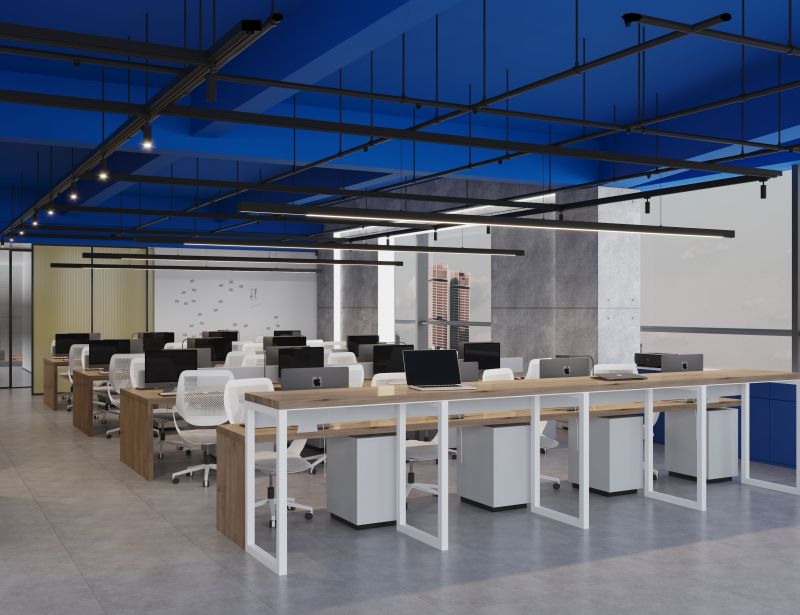
Fit-out contract – definition and legal classification as a construction contract
A fit-out contract is, as a general rule, a construction contract governed by Article 647 of the Polish Civil Code. Pursuant to this provision, the contractor undertakes to deliver the facility specified in the contract, constructed in accordance with the design and the principles of technical expertise, while the investor undertakes to perform the activities required by applicable regulations related to the preparation of the work, in particular to hand over the construction site and provide the design, as well as to accept the facility and pay the agreed remuneration.
The above definition in the Polish Civil Code means that a contract for office fit-out is subject to the provisions of the Polish Civil Code concerning construction contracts, and to a certain extent, the provisions regarding contracts for specific work apply to it (article 656 of the Polish Civil Code). This applies in particular to the provisions governing the scope of work, the obligations of the contractor and the client, as well as issues related to the warranty and liability for defects.
A practical example from Polish case law:
“While the proper performance of the renovation work and the adaptation of the premises to the plaintiff’s business activities constituted an essential element of the lease agreement, the actual performance of the work and adaptation of the premises was not reserved exclusively for the landlord. The agreement thus provided for a distinction between the landlord’s obligations – those strictly related to the lease agreement and those related to the preparation (adaptation) of the premises for their handover. The latter were characteristic of a construction contract” (judgment of the Polish Court of Appeal in Warsaw, 7th Commercial Division, dated December 2, 2019, case no. VII AGa 1379/18).
“The subject matter of a construction contract may indeed be the construction, reconstruction, assembly, renovation, or demolition of a building” (judgment of the Polish Supreme Court dated May 18, 2007, case no. I CSK 51/2007).
Scope of work in a fit-out contract (finishing and adaptation of commercial premises)
Fit-out contracts are typically drafted individually for a specific project and may vary depending on its nature, size, and specific characteristics. However, as a general rule, a fit-out contract should primarily specify the subject matter, location, and completion date of the contract.
The parties should define the scope of construction work as precisely as possible, for example:
“Comprehensive surface preparation and custom interior design of Unit A1 located in the “XYZ Shopping Center” building in Warsaw, at Commerce Street.”
A technical appendix must also be attached to the contract, containing a detailed description of the scope of work covered by the contract. Although the scope may vary and depends mainly on the specifics of the project and the client’s requirements, typical work performed during the fit-out will include: finishing work, electrical, plumbing, HVAC, and ventilation systems, carpentry, furniture, decorative work, etc. Of course, the contractor should commit to ensuring that all construction work is performed in accordance with applicable regulations, particularly the Polish Construction Law and accepted construction practices.
Another essential element that a fit-out contract should include is the specification of the project duration and deadlines for the completion of individual work phases, which will enable the determination of the final completion date. Consequently, this may allow for the determination of the date of handover of the premises to the tenant in the lease agreement. The purpose of the provisions regarding the work schedule is to ensure the timely completion of the project and to avoid delays, which could potentially affect the performance of the lease agreement with the tenant.
It is also recommended that the client specify in the contract the penalties that may be imposed on the contractor for delays in the completion of construction work. A typical penalty is a contractual penalty specified as a fixed amount or a percentage, calculated for each day the deadline is exceeded.
In conclusion, it is also worth emphasising that a tenant should consider issues relating to the fit-out of the premises within a broader context, taking into account not only the scope of the work and its cost, but also the provisions of the lease agreement concerning its duration and the possibility of early termination. This is particularly important when significant expenditure is incurred on the fit-out of commercial premises. In practice, before work begins, it is worth analysing the rules and consequences of early termination of the lease, which we discuss in more detail in our article on terminating a commercial lease.
Remuneration in a fit-out contract – lump sum, settlements, and milestone payments
Remuneration in an office fit-out contract may depend on several factors, including the size of the project, the scope of work, the location, the contractor’s experience, etc. As a rule, remuneration will take the form of a lump sum; less commonly, it will be based on a unit cost estimate or a time-based estimate. However, it is essential that the fit-out contract precisely specifies what the remuneration specifically covers, i.e., whether it covers the work itself or, for example:
- obtaining permits, approvals, opinions, certificates, and expert reports,
- conducting all tests, inspections, measurements, commissioning, and adjustments required by Polish Standards and regulations,
- warranty service,
- delivery and use of the contractor’s equipment.
Of course, it is also necessary to specify when payment will be made, whether payments will be made in stages or upon project completion, and whether the parties intend to prepare partial acceptance reports or only a final one.
An important consideration, particularly during periods of high inflation and in complex projects, is determining whether the remuneration is subject to changes or indexation during the performance of the contract. In this context, it is worth noting Article 632 § 2 of the Polish Civil Code, according to which if, as a result of unforeseeable changes in circumstances, the performance of the work would expose the contractor to a gross loss, the court may increase the lump-sum payment or terminate the contract.
It appears, however, that contractors should approach the possibility of invoking the cited provision with caution. Case law frequently indicates that an increase in the lump-sum remuneration is possible by invoking Article 632 § 2 of the Polish Civil Code before the court only if the parties expressed such an intention in the contract, e.g., by referring directly to this specific provision, or, more commonly, by providing for a different procedure for changing the lump-sum amount (e.g., the Polish Supreme Court’s judgment of October 26, 2000, II CKN 417/2000).
A practical solution for the parties in this regard would be to conclude an appropriate amendment to the contract, which could, for example, cover the scope of additional work, demonstrating that such work was unforeseeable at the time the contract was concluded.
The contractor may also be entitled to receive an advance payment toward the performance of construction work. In such cases, the contract should specify, among other things, when the advance payment is to be made, and whether the contractor is required to provide the client with security for the advance payment, for example in the form of a bank guarantee, an insurance guarantee, or promissory notes guaranteed by a bank or a credit union.
Obligations of the contractor and the client in a commercial space fit-out contract
A fit-out contract should also precisely define the obligations of the contractor and the client. Although these may vary depending on the complexity of the construction project or business conditions, generally, the contractor’s typical obligations will include:
- timely completion of work in accordance with designs and specifications,
- providing appropriate (contract-compliant) materials and equipment,
- ensuring quality of workmanship,
- cooperating with the construction supervisor,
- repairing defects and faults,
- ensuring the safety of persons performing construction work,
- complying with procedures and instructions issued by the client’s representatives, necessary to ensure proper execution, quality, and timely completion of the work,
- compiling and delivering the following documents required by legal regulations by the date of the planned final acceptance, if necessary.
Responsibilities of construction process participants under a fit-out contract
A common point of uncertainty regarding office space design contracts, particularly when defects are found in the facility, concerns the liability of the parties involved in the construction process. As a general rule, the contractor is liable for defects in the facility; however, the contractor’s work is based on technical documentation, specifically the design, which is often prepared by the investor (landlord). Against this backdrop, the Polish Supreme Court has taken the position that the contractor is not obligated to thoroughly review the provided design to detect defects (Polish Supreme Court judgment of March 27, 2000, III CKN 629/98, OSNC 2000/9, item 173). However, the parties to a fit-out contract should bear in mind that this subject matter is complex and requires a detailed legal analysis on a case-by-case basis whenever a problem arises.
The client’s obligations will primarily include:
- payment of the remuneration due to the contractor, within the time limits and under the terms specified in the contract,
- participation in and completion of partial acceptance (if provided for) and final acceptance within the time limits required by the contract,
- and, after signing the final acceptance protocol, taking over the work from the contractor.
Warranty in a fit-out contract – scope of the contractor’s liability
A warranty in a construction contract is the contractor’s obligation to repair defects and flaws that may arise in the completed work for a specified period of time after the project is completed. This is standard practice in many fit-out contracts and is intended to assure the client that the work will be performed in accordance with applicable quality standards. The warranty also gives the client confidence that the contractor is obligated to repair any issues that may arise after the project is completed. However, it is essential that the warranty terms be clearly defined in the contract, particularly regarding:
- the warranty period, i.e., the time during which the contractor is responsible for repairing defects and faults. Typically, this is a period of 12 to 24 months, though it may vary depending on the specifics of the project and negotiations,
- the scope of the warranty, i.e., specifying which defects and faults are covered by the warranty,
- the complaint reporting procedure,
- any exclusions and limitations of the warranty.
Contractual penalties in a fit-out contract – delays and breaches of contract
As noted above, a typical circumstance for imposing a contractual penalty on the contractor is a delay in the performance of construction work. It is worth noting, however, that in addition to failure to meet the completion deadline, the client may reserve the right to impose contractual penalties in other circumstances. The most common of these include:
- delays in remedying defects identified during acceptance or during the warranty period,
- termination of the contract due to circumstances for which the contractor is responsible,
- the contractor’s authorization of any work, services, or supplies related to the performance of the contract by subcontractors not approved by the contractor,
- breach of the obligation to maintain the confidentiality of the contractor confidential information.
Withdrawal from a fit-out contract – grounds and legal consequences
A fit-out contract should also, as a rule, contain clauses regarding the contractual right to withdraw from the contract. Withdrawal from the contract generally has ex tunc effect, meaning that the legal relationship is terminated retroactively, and the contract is deemed never to have been concluded. As a general rule, therefore, whatever the parties have provided to each other must be returned in an unaltered state.
However, the parties should always bear in mind that withdrawal is an exception to the principle of the permanence of contractual obligations; hence, the provisions of the contract, the regulations governing this institution, and the statements made by the parties on that basis should be interpreted strictly (Polish Supreme Court judgment of May 15, 2013, case no. III CSK 267/12). A strict interpretation means that the court or authority interpreting the provision applies it in accordance with its explicit wording, without applying an expansive or restrictive interpretation.
The grounds for terminating a contract may vary and may depend on the specific terms agreed upon by the parties; however, as a general rule, they will include situations where:
- the contractor has failed to commence work without just cause;
- the contractor carries out the work in a manner that is disruptive to customers and tenants of the commercial building;
- the contractor has not taken over the construction site within the designated time;
- the contractor is so far behind schedule that it is doubtful the work will be completed by the deadline specified in the schedule;
- the contractor performs the work in a manner inconsistent with the bid, applicable regulations, or accepted construction practices;
- a petition for the contractor’s bankruptcy is filed;
- if, during the performance of the work, the contractor uses/brings onto the construction site/hires a subcontractor in violation of the terms specified in the contract;
- fails to submit an insurance policy document.
A practical example from Polish case law:
“Article 395(2) of the Polish Civil Code, which defines the effect of exercising the right to rescind a contract and the parties’ related obligations, and Article 491(2) of the Polish Civil Code, which concerns the scope of the statutory right to rescind a contract, are not of a ius cogens nature, and if the issues described therein are regulated by contract in a manner differing from the statutory provisions, they do not apply directly. Since the parties, depending on their will, may reserve the right to withdraw from the contract, they may also specify the effects of withdrawal (ex nunc instead of the statutorily preferred ex tunc)” (judgment of the Polish Court of Appeal in Białystok, 1st Civil Division, dated March 24, 2016, case no. I ACa 395/15).
“As a result of withdrawal from the contract in situations covered by the provisions of Article 494 of the Civil Code, the contractual relationship arising from the contract is terminated, pursuant to the analogous application of the first sentence of Article 395 § 2 of the Civil Code, while, in derogation from the principle of accessory nature, the contractual provisions regarding contractual penalties, provided for by the parties precisely in the event of withdrawal from the contract, when the liability of one of the contracting parties for damage caused by non-performance of the obligation arises” (judgment of the Polish Court of Appeal in Warsaw, 1st Civil Division, dated March 8, 2016, case no. I ACa 784/15).
What are the business reasons for entering into contracts for office fit-outs in commercial premises?
Finally, it is also worth mentioning the main business reasons why landlords decide to enter into fit-out contracts for commercial buildings.
In today’s business world, the functionality and aesthetics of the work environment have a significant impact on a company’s efficiency and image; therefore, investing in fit-outs appears to be an integral part of business development and brand-building strategies. Companies that ensure their workspaces are properly equipped and finished not only gain the loyalty of employees and customers but also become more attractive in the labor market and gain a competitive advantage. Consequently, investments in fit-outs can contribute to increasing a company’s operational efficiency and building its positive image in the market by:
- Adapting the space to the needs of the business. Many tenants have unique requirements regarding their workspace. Fit-out work allows for the adaptation of office, retail, or service spaces to the specific needs and operational processes of the company. In practice, this involves designing office space to facilitate effective communication among employees, creating a display area for a retail store, or adapting the space for a specific industry, such as a restaurant or hair salon.
- An optimally designed space can significantly increase work efficiency and employee productivity. Fit-out work may include, for example, arranging rooms in such a way as to minimize distances between departments, creating relaxation zones, or designing workstations ergonomically.
- In the case of commercial or service buildings, a properly designed and finished fit-out can attract customers and create a positive impression of the brand or company. Aesthetic and functional interiors can be a key factor in determining business success.
- A well-executed fit-out can significantly increase the value of a commercial property. Investors and property owners often invest in fit-outs to make their offerings more attractive to tenants and, consequently, command higher rental rates.
- As tenants’ businesses grow, their needs regarding workspace may change. Fit-out work allows commercial buildings to be flexibly adapted to the evolving requirements of users.
Summary
A fit-out contract is one of the most important documents governing the process of adapting and finishing commercial space. A properly drafted contract should precisely define, among other things, the scope of work, the implementation schedule, compensation, the rules for acceptance of the work, the parties’ liability, the warranty, and the grounds for imposing contractual penalties and terminating the contract. Proper regulation of these issues helps minimize the risk of disputes, protect the interests of the investor and contractor, and ensure the project is completed efficiently within the budget and on schedule.
How we can help with a fit-out works agreement
If you are planning to enter into a fit-out works agreement concerning the finishing, adaptation or modernisation of commercial premises, we can help prepare or review the documents so that they properly protect the interests of the investor, tenant, landlord or contractor.
In particular, we assist with:
- preparing or reviewing a fit-out works agreement for an office, service, retail or hospitality premises,
- precisely defining the scope of works, finishing standard, technical documentation and contractor’s obligations,
- regulating the works schedule, interim deadlines, partial acceptances and final acceptance,
- analysing provisions concerning lump-sum remuneration, additional works, advance payments and staged payments,
- preparing rules of liability for defects, faults, delays and improper performance of works,
- reviewing provisions concerning warranty, contractual penalties and withdrawal from the agreement,
- analysing the relationship between the fit-out agreement and the commercial lease agreement, including fit-out costs, rent-free periods and the obligation to reinstate the premises.
We assist both parties commissioning fit-out works and contractors carrying out the finishing of commercial premises. We review the draft agreement, identify risks, propose amendments and support the client in negotiations in order to reduce the risk of disputes at the stage of performance, acceptance and settlement of the works.
FAQ
There are no regulations or standard market rules governing the financing of fit-out work. In the context of commercial leasing, the costs of office fit-out may be borne by either the tenant or the landlord. Sometimes, the parties also split these costs between themselves according to terms specified in the lease agreement.
The financing method chosen by the parties depends on a number of factors, primarily: the length of the lease agreement, the tenant’s attractiveness to the landlord, the technical and aesthetic standard of the building, the current market situation, and the scope of the planned fit-out work. For this reason, issues related to fit-out financing should be detailed in the lease agreement and the documentation regarding the execution of the work.
Yes. A rent-free period is one of the most common forms of support offered by landlords when leasing commercial space. In practice, this mechanism works as follows: for a specified period, ranging from a few to several months depending on the terms of the transaction, the tenant does not pay the base rent, even though they may already be conducting fit-out work or using the premises. The length of the “rent-free” period depends on the parties’ agreement, taking into account primarily the term of the lease agreement, the building’s standard, market conditions, and the scope of the tenant’s fit-out project.
Negotiations of a commercial lease agreement cannot be limited solely to the rent rate, as a significant portion of the costs incurred by the tenant is related to the fit-out of the premises. Of particular importance are: the scope and standard of the premises’ finish prior to handover to the tenant, the amount and allocation of the fit-out budget, as well as a precisely defined schedule for the fit-out work. It is also important to establish the rules for settlements between the parties, including the timing and conditions for reimbursement or bearing of costs, as well as to address the issue of the tenant’s potential obligation to restore the premises to their original condition upon termination of the lease.